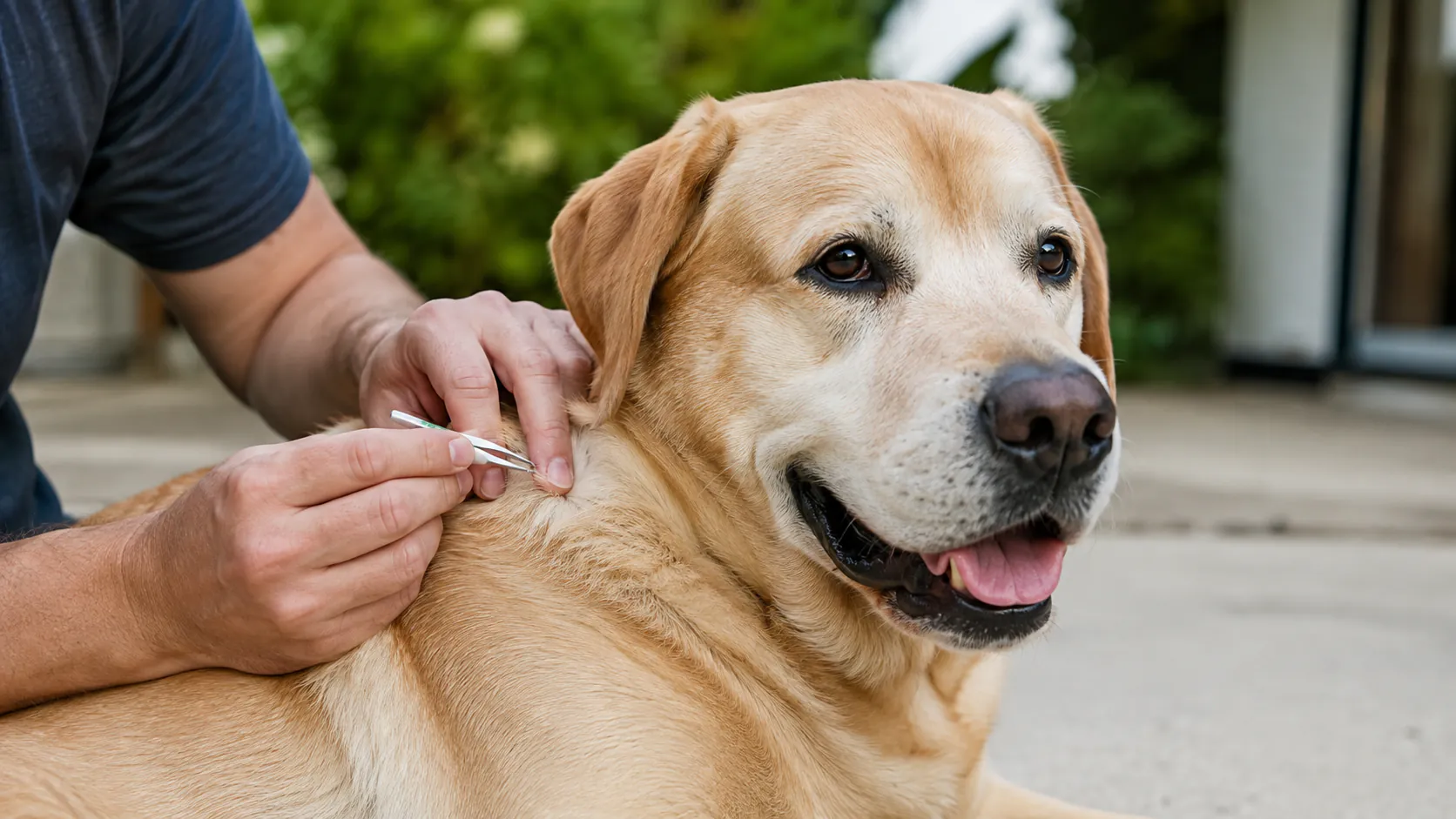
Summer may be winding down, but tick season is not. In Waterloo Region, cooler weather does not automatically mean ticks have disappeared. Fall is an active time for ticks, and a mild winter day can be warm enough for them to start looking for a host again.
That matters whether your dog is exploring a conservation trail, walking beside long grass in the neighbourhood, or simply spending time in the backyard. A few practical habits can help protect both pets and people without keeping anyone indoors.
Why fall does not end tick season in Waterloo Region
Region of Waterloo Public Health says ticks can be found at any time of year when the temperature is above freezing. Blacklegged ticks have also been found in many places across the region, including wooded areas, tall grass, bushes, parks, and even city gardens.
Local veterinary advice reinforces the point. Manitou Animal Hospital in Kitchener cautions that ticks look for a host when temperatures rise above 4°C. Bridge Street Veterinary Hospital in Waterloo notes that activity commonly increases in fall and that mild winter days can also bring exposure.
In other words, the first frost is not an all-clear. Waterloo Region often gets thaws and above-freezing afternoons well into late fall and winter, so it makes sense to base your precautions on conditions and your dog's lifestyle instead of the month on the calendar.
Where dogs and people are most likely to meet ticks
Ticks do not fly or jump. They wait on vegetation and attach when a person or animal brushes past. Be especially alert around:
- Tall grass and overgrown trail edges
- Leaf litter and brush
- Wooded paths and forest edges
- Shrubs, woodpiles, and stone borders
- Conservation areas, rural properties, and Grand River trail systems
- Backyard edges that meet natural or overgrown areas
This does not mean local trails should be avoided. It means staying near the centre of marked paths, checking everyone afterward, and keeping prevention current.
How to help prevent tick bites on your dog
Ask your veterinarian about year-round protection. Oral, topical, and other tick-prevention products are not interchangeable, and the right choice depends on your dog's age, weight, health, travel, and exposure. Parkdale Animal Hospital in Waterloo advises owners to choose products with a veterinarian because some parasite medications are not safe for every pet. Ask whether a Lyme vaccine is appropriate too; vaccination and tick prevention serve different roles and may be recommended together for some dogs.
Do a hands-on tick check after outdoor time. Run your fingers slowly through your dog's coat and feel for a small bump. Pay close attention to:
- Around and inside the ears
- The face, chin, and neck
- Under the collar or harness
- Armpits and groin
- Between the toes and around the paw pads
- Under the tail
Tiny immature ticks can be difficult to see, especially in a thick or dark coat. Good lighting and a fine-tooth comb can help. Check your own clothing and skin at the same time because pets can carry unattached ticks indoors.
Make the yard less inviting to ticks. Keep grass trimmed, clear fallen leaves and weeds from lawn edges, and tidy brush around fences, stonework, and woodpiles. The Public Health Agency of Canada also recommends a wood-chip, mulch, or gravel border between the lawn and wooded or shrubby edges. Place play areas and frequently used seating away from brush whenever possible.
What to do if you find a tick on your dog
- Remove it promptly. Use clean, fine-tipped tweezers or a purpose-made tick tool. Grasp the tick as close to your dog's skin as possible.
- Pull upward slowly and steadily. Do not twist, crush, burn, or smother the tick with petroleum jelly, nail polish, or essential oils.
- Clean the area. Wash the bite site and your hands after removal.
- Save useful details. Place the tick in a sealed container or bag, take a clear photo, and note the date and where your dog may have picked it up. The free eTick service can help identify it from a photo.
- Call your veterinarian for advice. Contact the clinic if you are uncomfortable removing the tick, part of it appears to remain, it may have been attached for a long time, or your pet seems unwell. Do not give your dog human antibiotics or use a product that was prescribed for another pet.
A tick bite does not automatically mean your dog will become ill, and not every tick carries disease. Your veterinarian can assess the exposure and decide whether monitoring, testing, or treatment is appropriate.
Signs to watch for after a tick bite
Some dogs with Lyme disease never show obvious symptoms. When illness does appear, local veterinarians advise watching for:
- Fever or unusual tiredness
- Reduced appetite
- Stiffness, joint swelling, or pain
- Limping that may shift from one leg to another
- Reluctance to walk, play, or exercise
Rare kidney complications can be serious. If your dog develops any new symptoms after possible tick exposure, contact your veterinarian rather than waiting for them to pass.
If a tick bites a person
Remove an attached tick right away with fine-point tweezers: grasp it close to the skin, pull straight out slowly without twisting or squeezing, and wash the area with soap and water. Save a photo and record the date, bite location, and where the exposure may have happened.
Waterloo Public Health does not accept ticks for testing, but eTick can help identify the species. If the tick is a blacklegged tick or cannot be identified, contact a health-care provider, especially if you feel unwell. Ontario pharmacists can also assess tick bites and, when appropriate, prescribe medication to help prevent Lyme disease. Seek medical advice promptly if an expanding rash, fever, chills, headache, fatigue, swollen lymph nodes, or muscle and joint pain develops in the following days or weeks.
This article provides general prevention and first-aid information. A veterinarian should assess concerns about your pet, and a pharmacist or other health-care professional should assess concerns about a person.
A simple fall and winter tick routine
- Keep veterinarian-recommended prevention on schedule.
- Carry a tick remover or fine-tipped tweezers on longer outings.
- Stay near the centre of trails and away from tall grass.
- Check your dog, family, clothing, and gear after outdoor time.
- Clear damp leaves and overgrowth from the yard.
- Repeat the routine on every mild winter day, not just in summer.
Ticks are part of outdoor life in Waterloo Region, but panic is not the answer. Consistent prevention, quick checks, and proper removal go a long way toward keeping fall walks and winter thaws enjoyable.
While tick prevention belongs in the hands of you and your veterinary team, a clean, regularly maintained yard is easier to inspect and enjoy. The Poop Valet provides weekly dog waste removal across Waterloo Region. If one more outdoor chore needs to come off your list, get a fast quote.
Quick answers
Frequently asked questions
When does tick season end in Waterloo Region?
There is no dependable calendar end date. Region of Waterloo Public Health says ticks can be found whenever temperatures are above freezing, so fall and mild winter days can still bring exposure.
Should my dog use tick prevention in winter?
That decision should be made with your veterinarian. Many local dogs remain exposed during winter thaws, trail walks, travel, or time near brush. A vet can recommend a schedule and product based on your dog's individual risk.
Can I remove a tick from my dog myself?
Yes, if you are comfortable doing so. Use fine-tipped tweezers or a tick-removal tool, grasp close to the skin, and pull upward slowly without twisting. Contact your veterinarian if removal is difficult, parts appear to remain, or your dog becomes unwell.
Can my dog give me Lyme disease?
Dogs do not spread Lyme disease directly to people. However, a pet can carry an unattached infected tick into the home, which is why checking pets, people, and gear after outdoor activity matters.